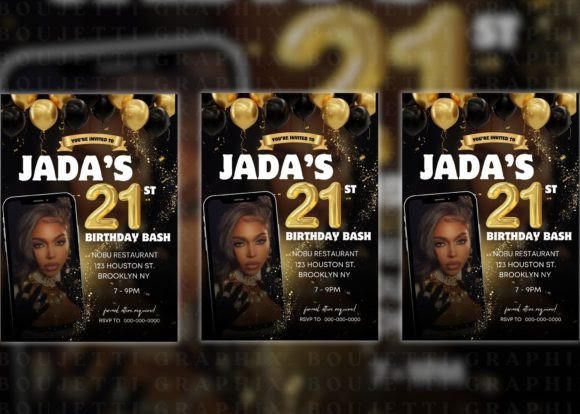
Black and white birthday invitations split into two camps — strict monochrome with no color at all, and black paired with gold or metallic accents for a dressier look. The 17 designs below are ranked by how often other buyers have saved each one, from a gold-on-black party invite at the top down to a lone pink neon design included as a contrast option.
This black and white invitation library adds new designs weekly, and most templates here are Canva-editable, so names, dates, and venue details go in without touching the background art. Several also work as flat digital sends — no printing required, and no design software beyond a browser.
See also: black birthday theme aesthetic ideas.
Quick Answer: This guide covers 17 black and white aesthetic birthday invitations, ranked from most-saved to least-saved. Most are Canva-editable and available for instant download.
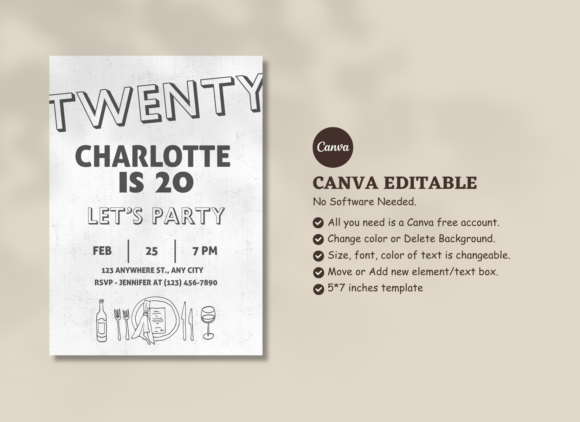
Pure black-and-white and black-with-gold are two different aesthetics — decide which one you want before picking a template, since mixing the two in one invite suite looks inconsistent.
All templates below are digital downloads. Edit the text in Canva or your design software of choice, then print on cardstock or send digitally. The list runs in order of popularity, so the top few are what other buyers have saved the most — useful as a shortcut if you’re deciding between several similar-looking options and want to know which one other people actually picked.
Black & Gold Digital Party Invitation
Deep black background with gold script lettering and a thin gold border frame — the metallic contrast is what pushes this to the top of the list. Editable in Canva, so names, dates, and venue details drop in without touching the background art. The gold weight is heavy enough to still read clearly when printed on darker cardstock, which is where a lot of black invitations lose legibility.
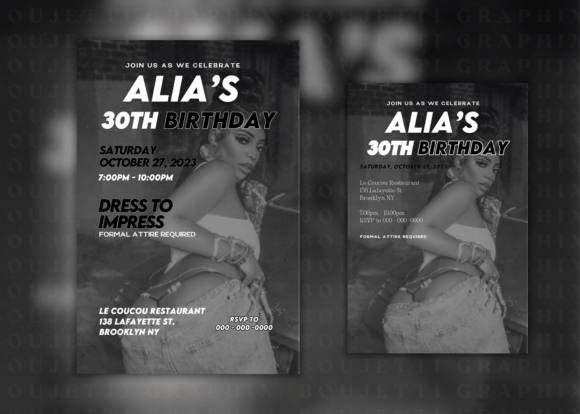
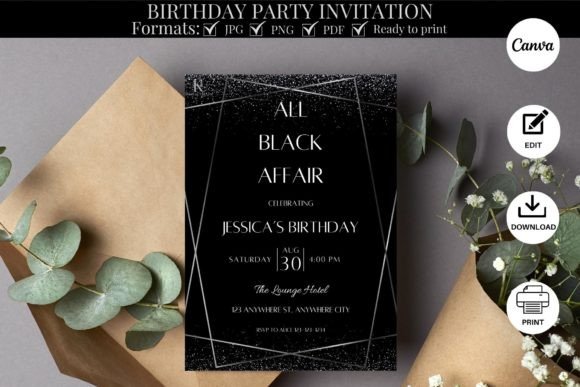
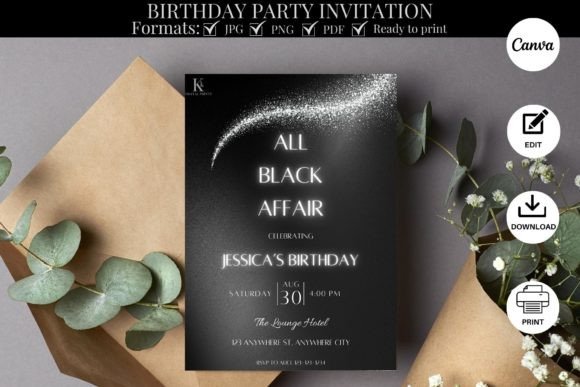
All Black Affair Birthday Party Invite
Solid black backdrop with bold white block-letter typography spelling out the party name, no ornamental extras competing for attention. This design shows up four times in this list under separate listings, all from the same creator, which says something about how consistently people search for this exact all-black look. The heavy white type also photographs well for an Instagram story announcement, not just a printed card.
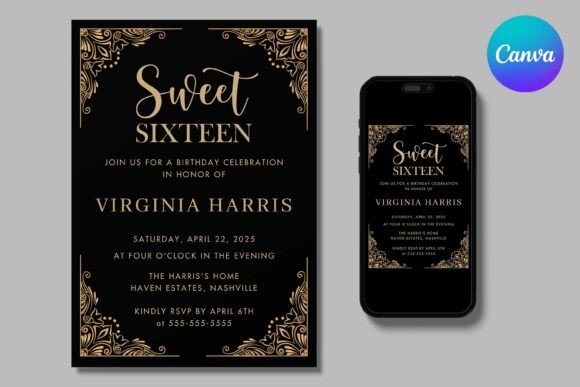
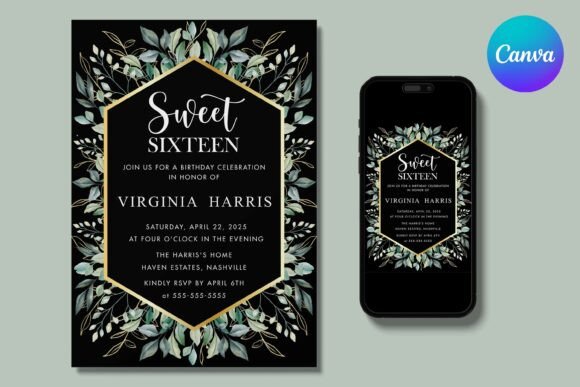
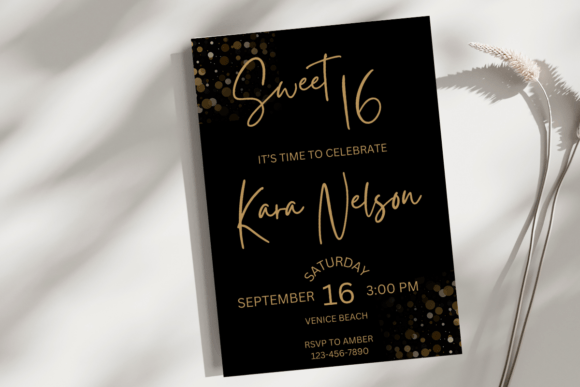
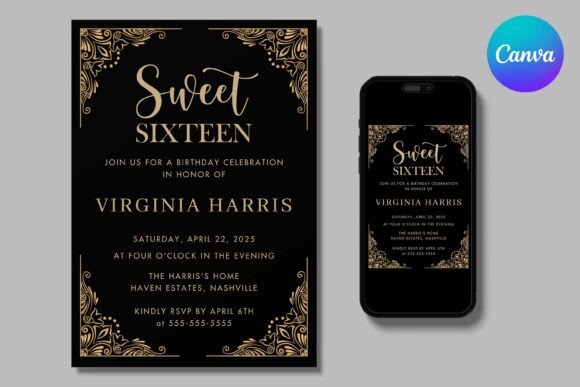
Black Gold Sweet Sixteen Birthday Invite
Black background paired with warm gold numerals and script for a Sweet Sixteen milestone, gold foil-style texture on the number itself. Built specifically for the 16th birthday rather than a generic template, so the wording is already set. Pair it with the matching Quinceañera design further down the list if you’re sending invites for siblings in the same family.
All Black Affair Birthday Party Invite
Same all-black-affair concept as the top design in this family, this listing swaps in a slightly different layout — text stacked centrally instead of split top and bottom. Useful if you want the same aesthetic with a different text arrangement, especially if your venue name or RSVP details run longer than the split-layout version can comfortably fit.
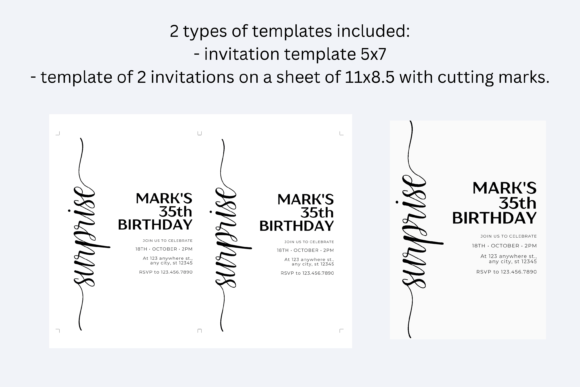
Black White Surprise Birthday Invitation
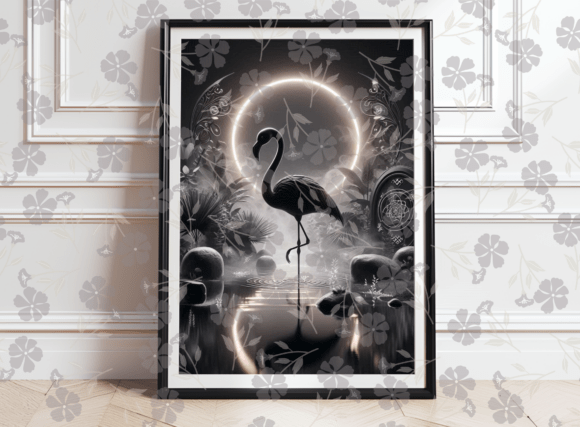
Black and white split composition with a surprise-party announcement across the center in bold serif type. The high-contrast black/white pairing reads clearly even at small sizes, which matters if you’re sending this as a phone screenshot rather than a printed card. The word “surprise” is baked into the design, so it’s built specifically for a surprise party rather than a general celebration.
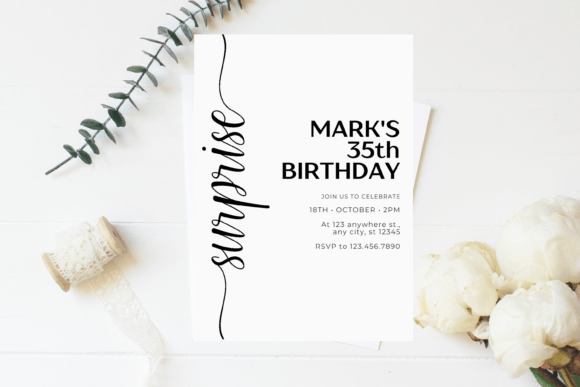
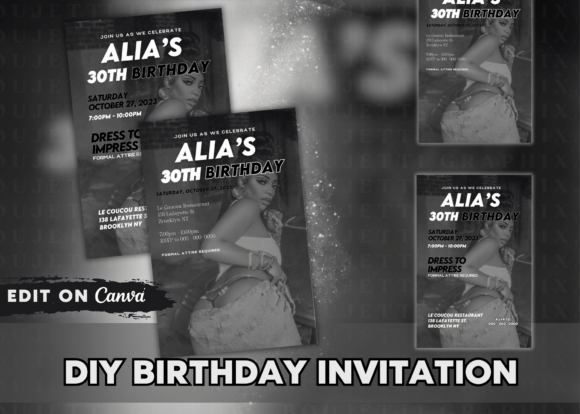
Canva Customizable Birthday Invitation
Fully Canva-customizable layout built around a black base, all text and accent elements set as editable placeholders. This is the most flexible option in the set if you plan to swap fonts or colors beyond the default black-and-white palette. Because every layer is editable rather than locked into a flat graphic, it’s also the easiest one here to adapt into a matching thank-you card afterward.
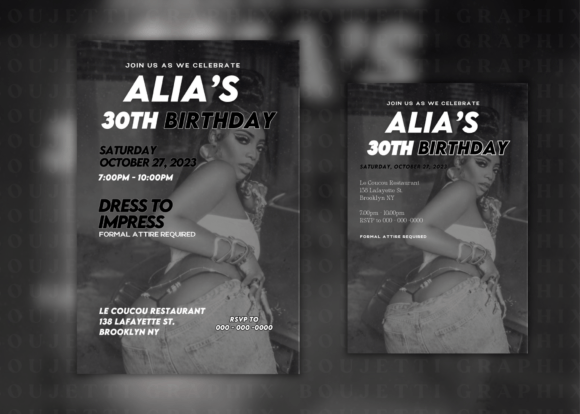
All Black Affair Birthday Party Invite
Third listing in the All Black Affair family, same bold white lettering on black but scaled and spaced slightly differently than the other three. Pick whichever of the three fits your photo or logo placement best — this version leaves the most open space at the bottom third, useful if you want to add a venue map or QR code for RSVPs.
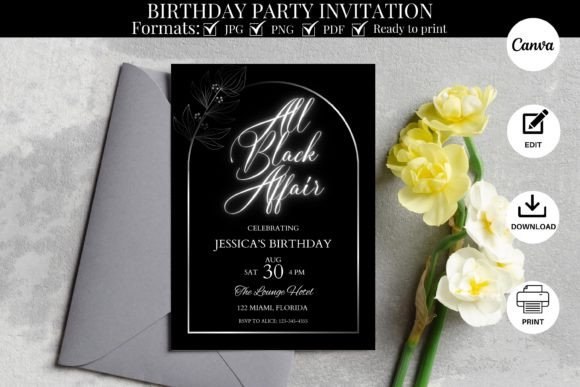
Black&Gold Quinceañera Birthday Invite
Black background with warm gold Quinceañera-specific wording and a floral gold accent along one edge, built for the 15th birthday milestone rather than a general party. The gold-on-black pairing matches the Sweet Sixteen design above if you want a consistent look across multiple invites for different birthdays in the same family or friend group.
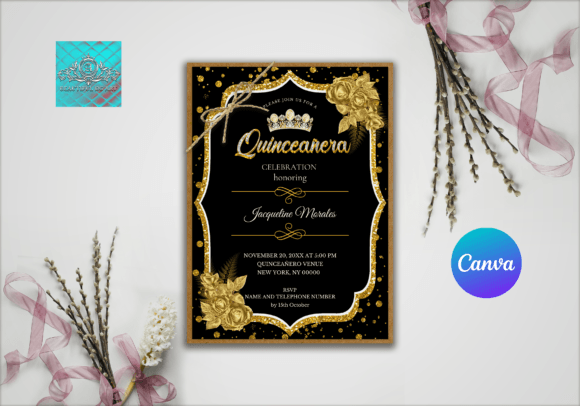
All Black Affair Birthday Party Invite
Fourth and simplest version of the All Black Affair template, stripped down to just the essential text with more open black space around it. Works well if you’re adding your own photo or logo and don’t want a busy layout competing with it — this is the plainest of the four, best treated as a starting canvas rather than a finished design.
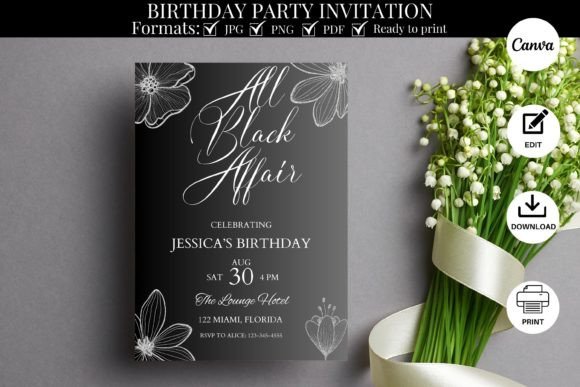
Browse All Black & White Birthday Invitations →
Black and White Birthday Invitation
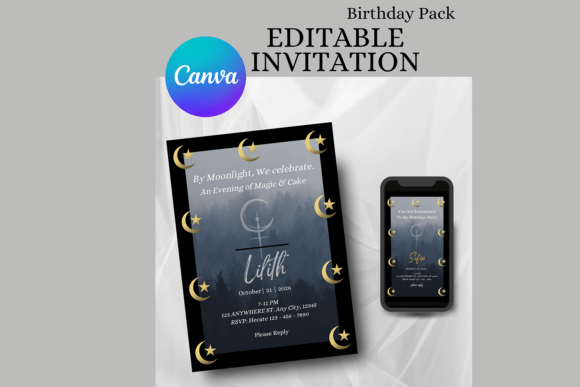
Straightforward black-and-white layout with a thin white outline frame and centered serif text, no color accents at all. This is the closest match to a strict black-and-white aesthetic if you want zero color creeping into the design, and it prints reliably even on a basic home printer since there’s no gradient or foil effect to lose in translation.
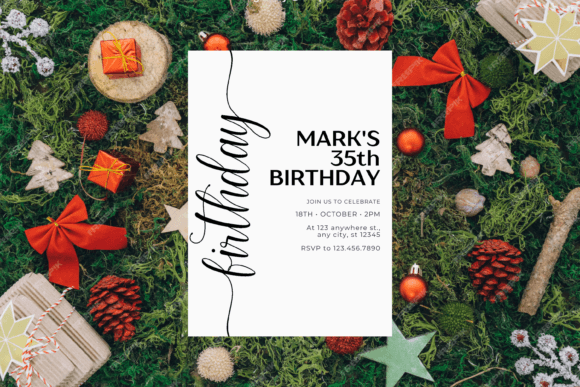
Black Style Birthday Invitation Template
Black background with a subtle textured overlay behind white script text, giving it more depth than a flat black fill. The texture reads as a soft charcoal grain rather than pure black, which photographs slightly warmer under indoor lighting than the flatter designs earlier in this list, so keep that in mind if you’re matching it to a specific venue’s lighting.
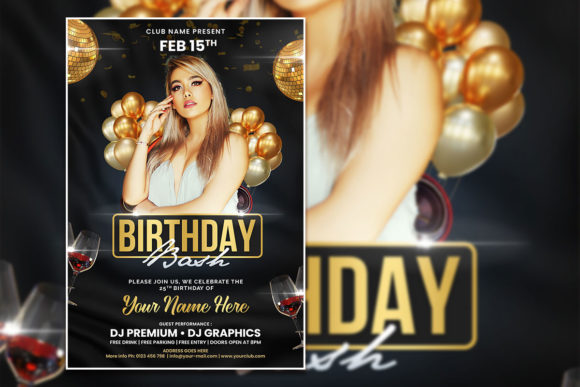
Elegant Birthday Invitation
Understated black design with fine white line details framing the text block, closer to a formal event invite than a typical birthday party flyer. Good option if the party has a more grown-up, dinner-party feel rather than a loud celebration — the thin line work keeps it from reading as somber despite the all-black palette.
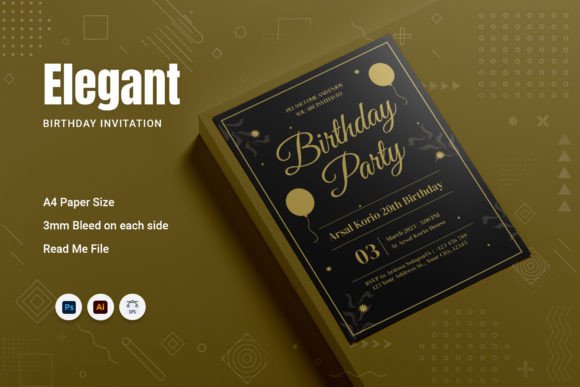
Digital Retro Birthday Invitation
Retro-inspired layout mixing black background with a muted vintage color accent and a groovy typeface, digital-only format. It leans further from strict black-and-white than most entries here, so treat it as the retro variant of the theme if you want a nostalgic edge rather than a purely modern monochrome look.
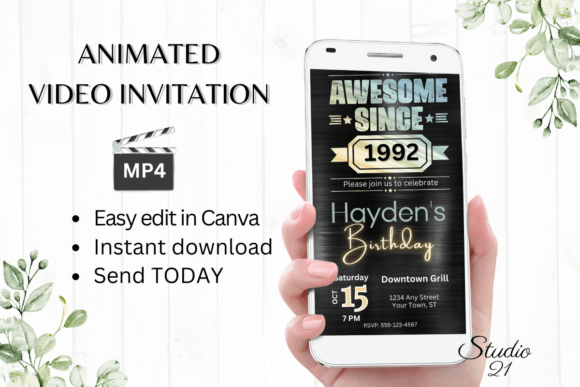
Gold Black Sweet Sixteen Birthday Invite
Gold and black Sweet Sixteen design, second listing in this pairing, with the gold concentrated into a single large numeral rather than spread across the text. A cleaner option than the more detailed gold-foil version earlier in the list, and easier to read at a glance if you’re printing it small, like on a wristband or place card.
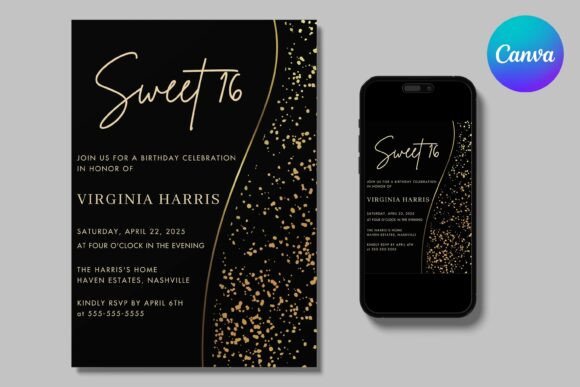
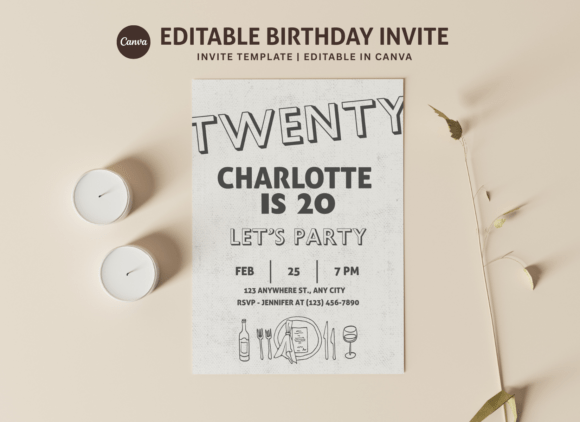
Simple Black and White Birthday Invite
Minimalist black-and-white layout with generous white space and small centered text, the plainest design in the set. Best suited if you’re adding your own photography or graphic behind the text rather than relying on the template’s built-in styling — the sparse layout leaves the most room to layer in a personal photo without it competing with existing decoration.
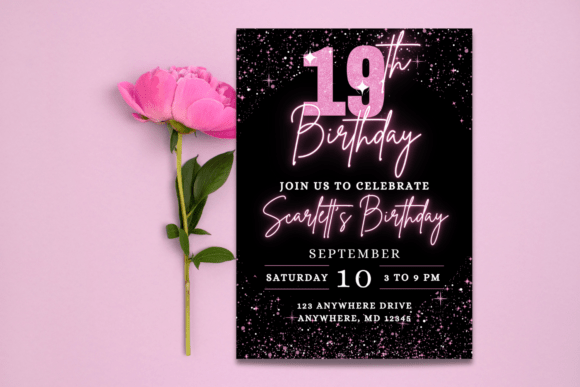
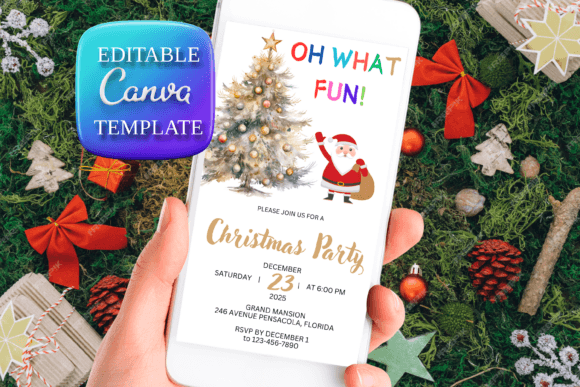
Pink Neon Birthday Invitation
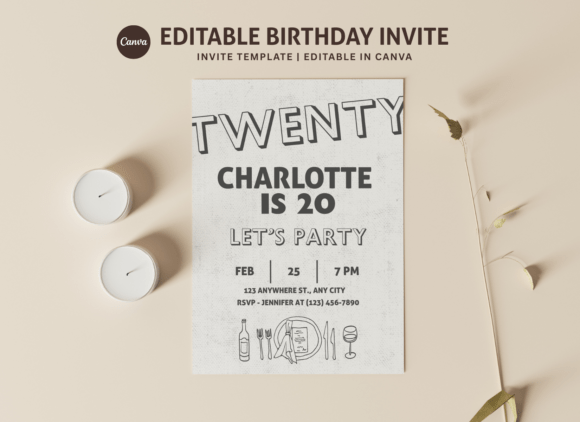
The one outlier here — a bright pink neon-style design rather than black and white, included as a contrast option if you want to break from the monochrome theme for one detail like a save-the-date sticker or social post. It’s a useful pairing if the black-and-white invite is the formal piece and you want a louder, more playful accent for digital promotion.
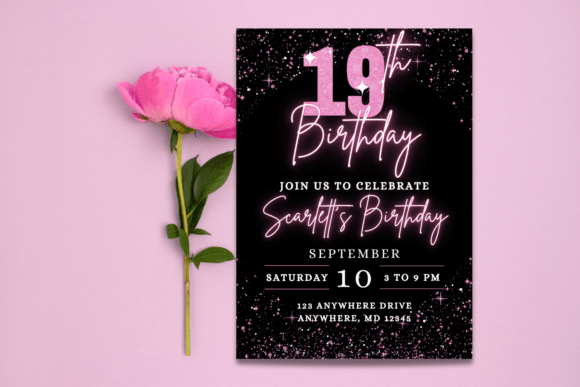
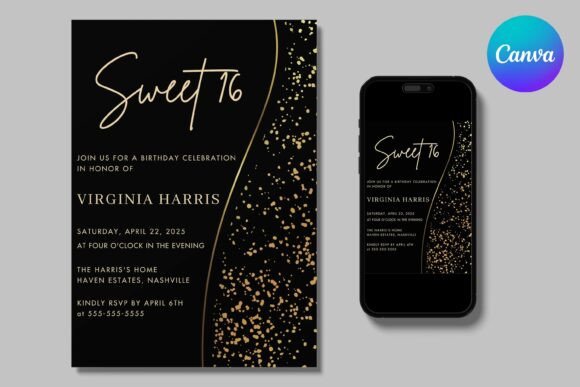
Gold Black Sweet Sixteen Birthday Invite
First listing in the Gold Black Sweet Sixteen pairing, similar layout to its sibling design but with the gold elements positioned along the top edge instead of centered. Compare both versions side by side before picking one — this top-heavy placement leaves more open black space below for a photo insert or additional event details.
For more milestone-specific options, see our black bday aesthetic collection.
Printing a Black Invitation at Home: Ink, Paper and Size
A full black background is the one thing that makes these designs hard to print, and the templates rarely warn you. Out of 53 invitation templates on sale at Creative Fabrica that are built around black, 42 are sold as printable, but only 18 name a print size, 14 say anything about paper and just 1 mentions ink or toner. You find out about the ink when the cartridge runs dry halfway through the guest list.
- Print one proof first. A 5×7 card with a solid black field uses many times the ink of a white one, so print a single copy and look at it in daylight before you run the batch.
- Use matte cardstock. Uncoated or matte card around 80 to 110 lb takes black evenly; glossy photo paper shows every streak and fingerprint.
- Send the black version, print the white one. If a template comes in both, email or text the black design and print the white-background version, which keeps the same type and gold accents.
- Set the size before you export. When the template does not say, set the page to 5×7 in Canva and download a PDF Print at that size, so the edges are not cropped by the print shop.
Key Takeaways
- Decide between pure black-and-white or black-with-gold before choosing — the two aesthetics don’t mix well within one invite suite, so pick a lane before you start sending invites out.
- The All Black Affair family appears four times from the same creator with slightly different text layouts — compare all four before picking one, since the spacing differences matter more than they look at a glance.
- Gold accent designs suit milestone birthdays (Sweet Sixteen, Quinceañera) better than general party invites, since the wording is often already set for that specific age.
- Canva-editable templates are the most flexible if you plan to adjust fonts, swap colors, or add a photo rather than using the design exactly as downloaded.
Frequently Asked Questions
Can I print a black background invitation without it looking washed out?
Use a matte or satin cardstock rather than glossy — glossy paper tends to reflect light off large dark areas and mutes the contrast.
What’s the difference between the four “All Black Affair” listings?
They’re the same core design from one creator with small layout variations — text placement and spacing differ slightly between each listing.
Do the gold accent designs work for a formal event?
Yes — the black-and-gold pairing reads as more upscale than plain black-and-white, so it suits milestone birthdays or dinner-party-style celebrations well.
Is the pink neon design meant to match the rest of this set?
No — it’s included as a contrast option for anyone who wants to break the monochrome theme for one specific use, like a social post or save-the-date sticker.
Will a black background invitation look different depending on the screen it’s viewed on?
Yes — dark designs can shift slightly in brightness and contrast between phone, tablet, and computer screens, so a gold accent that looks crisp on one device may look duller on another. If sending digitally, preview the file on a couple of different screens before sending it out.
 Pin it
 Pin it
 Pin it
 Pin it
 Pin it
 Pin it
 Pin it